DevOps and engineering features of Simvix DevPulse: integrated modules, AI assistant and automations for your team.
Every module, with real screenshots
Screens of the Simvix DevPulse application with demo data.
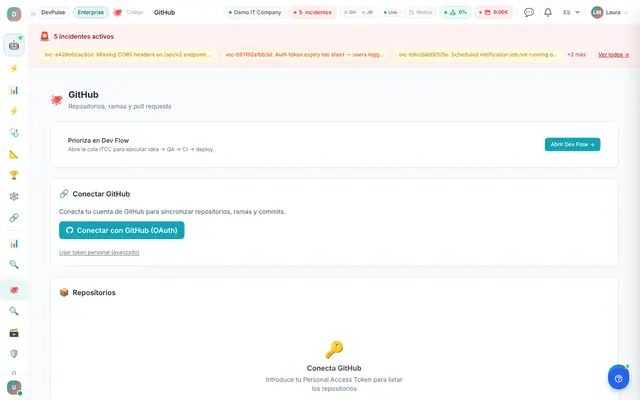
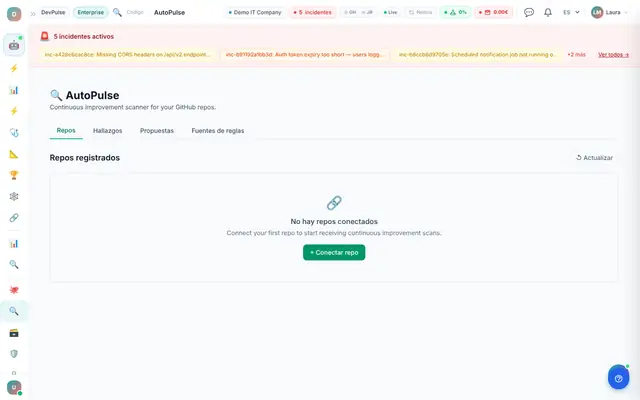
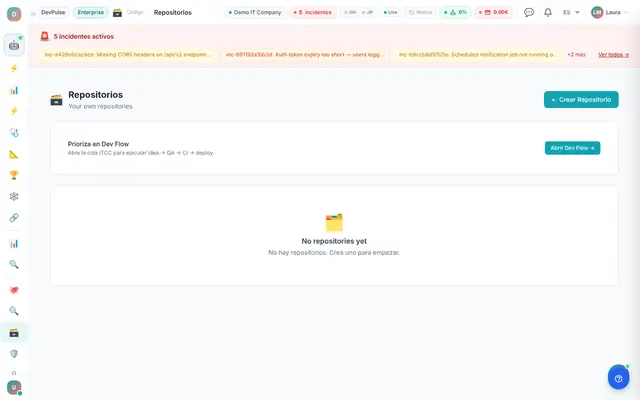
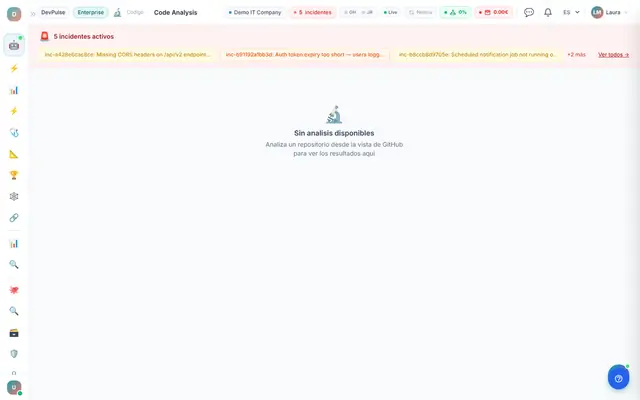
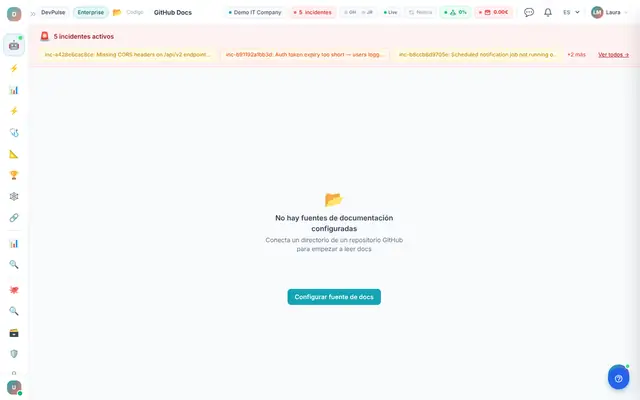
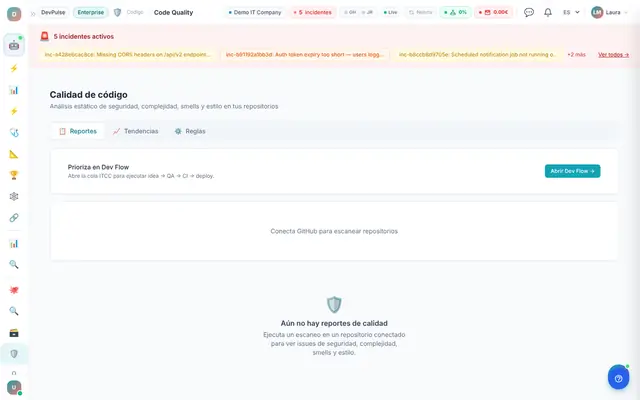
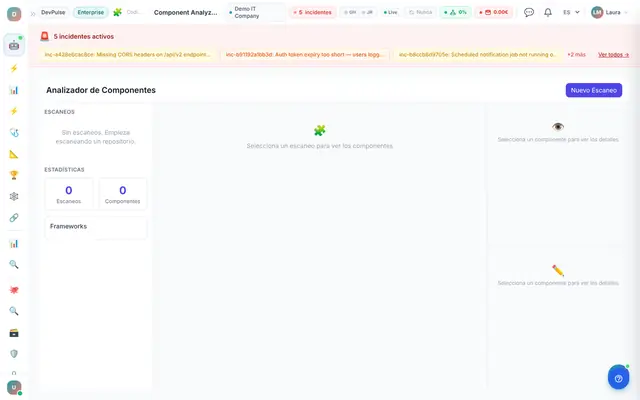
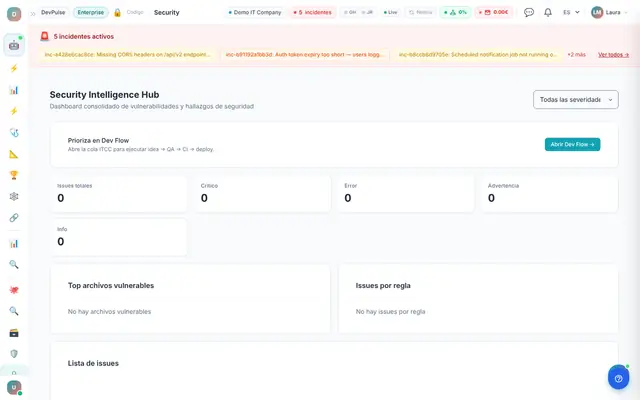
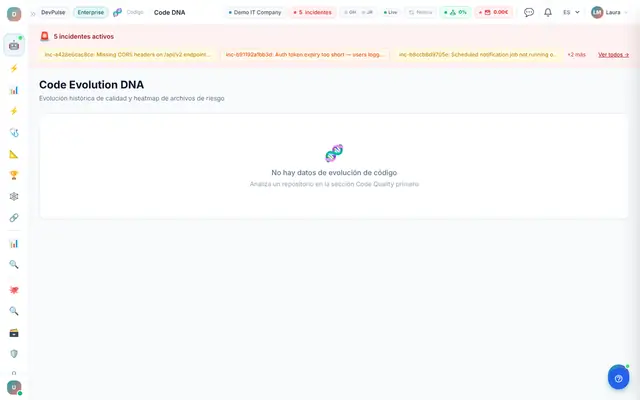
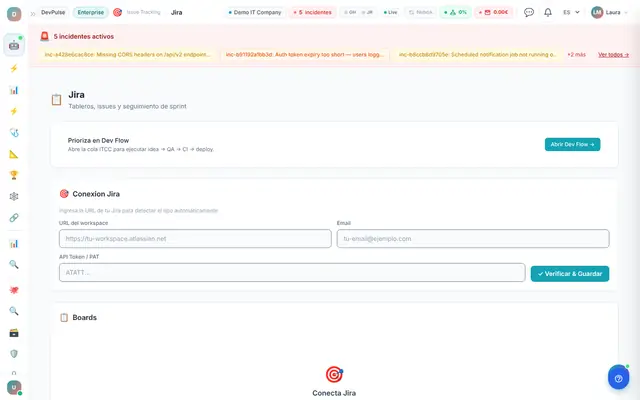
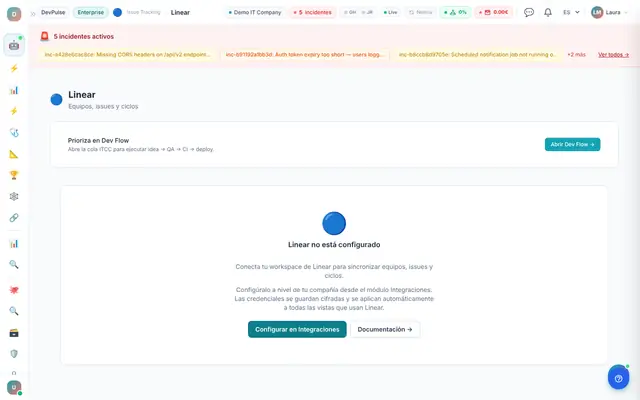
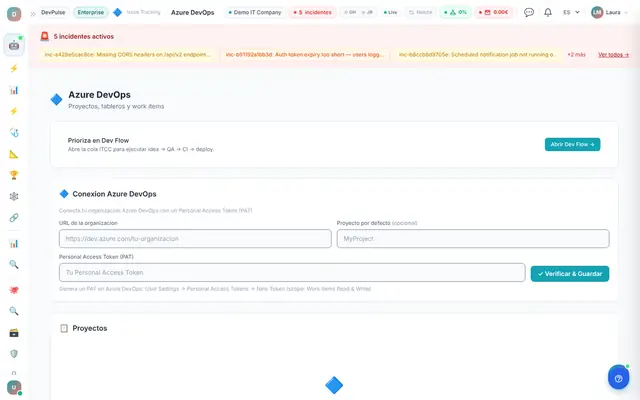
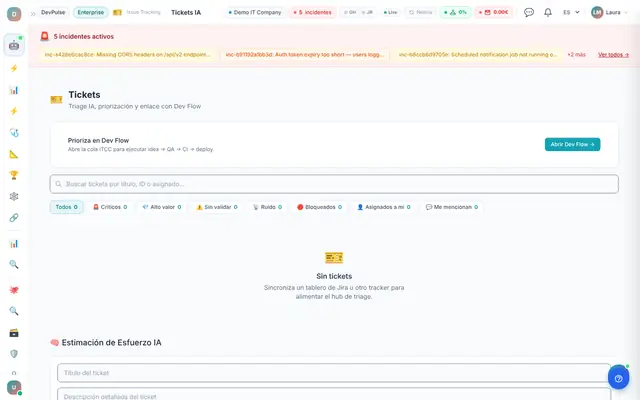
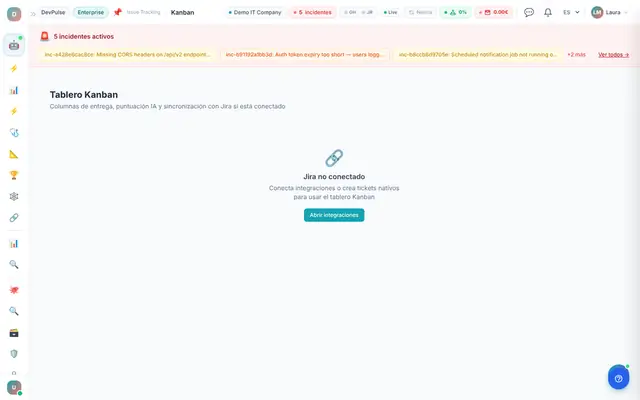
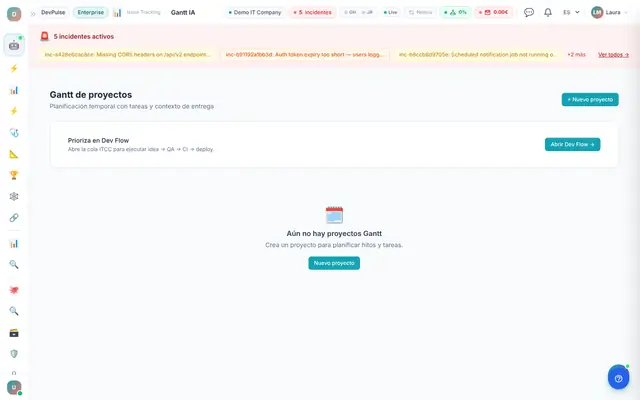
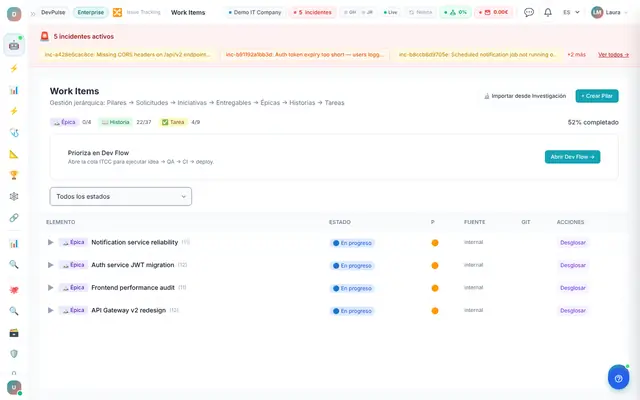
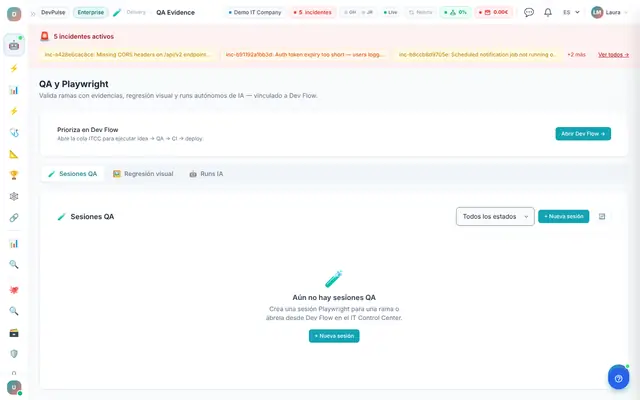
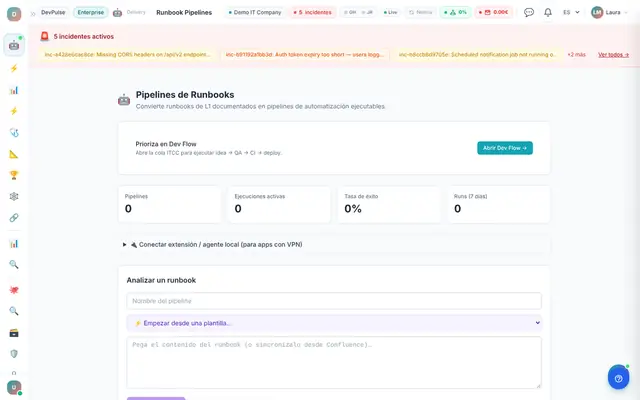
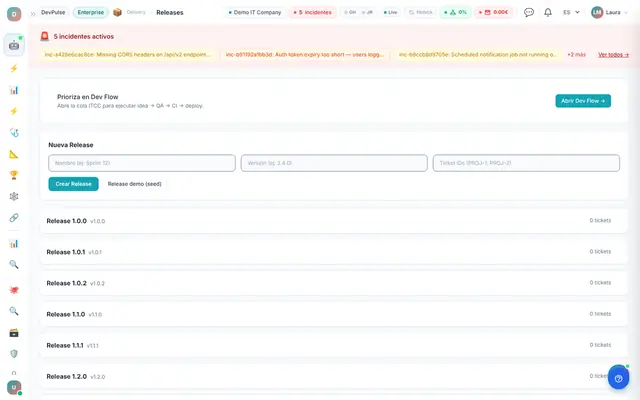
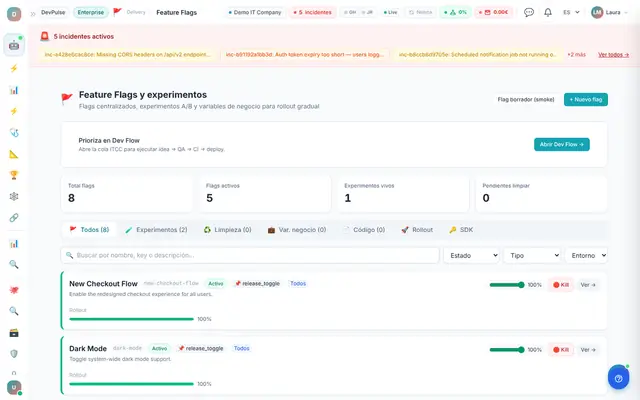
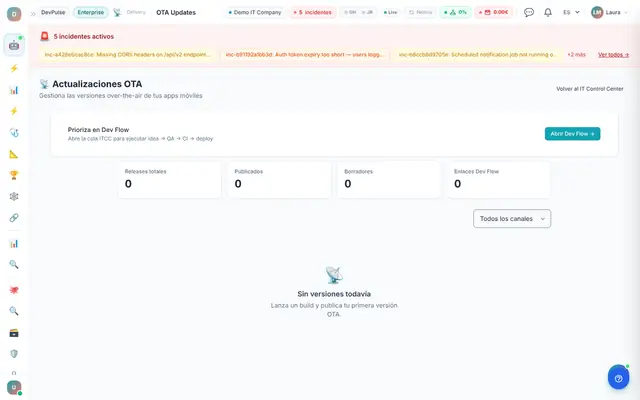
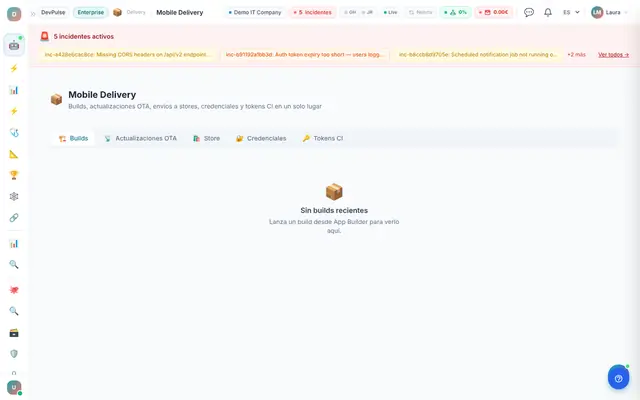
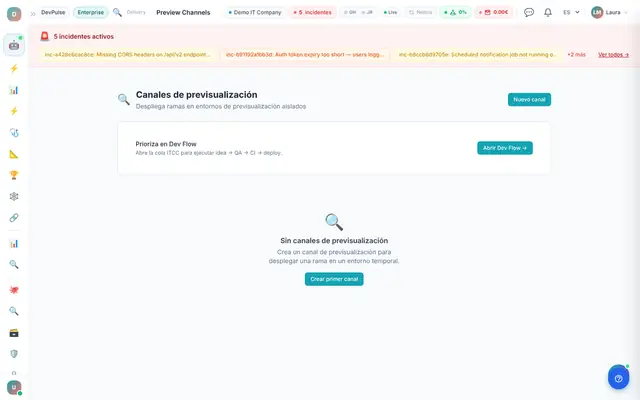
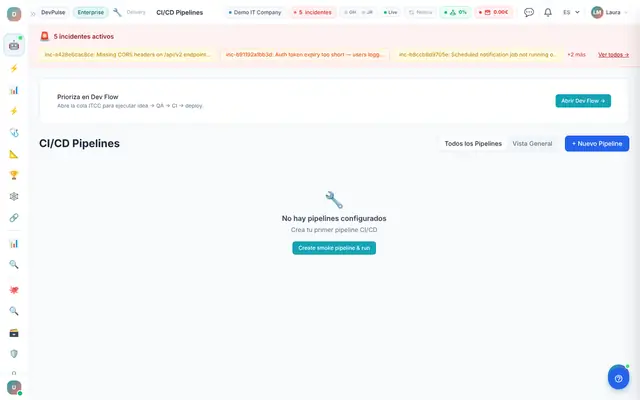
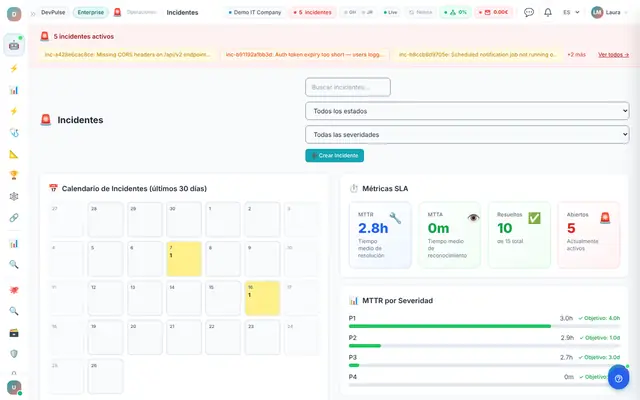
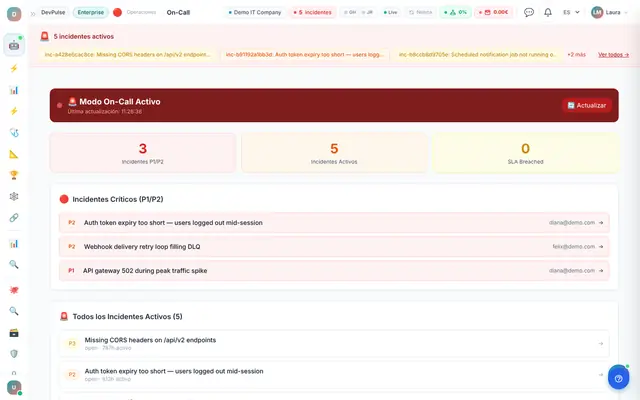
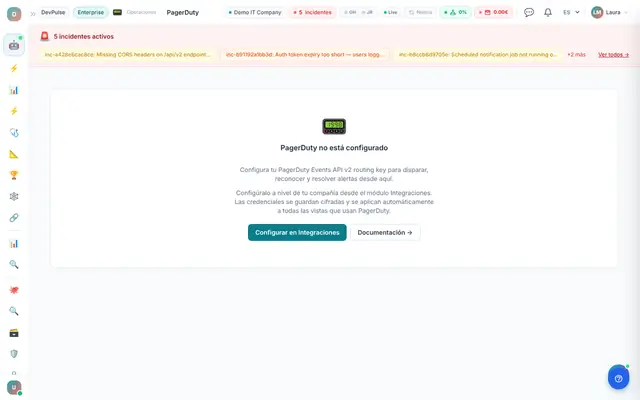
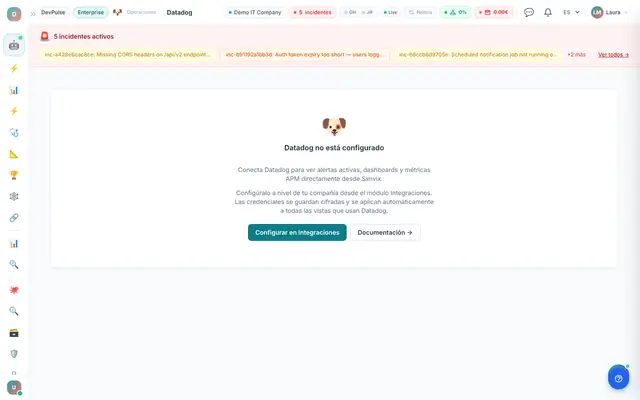
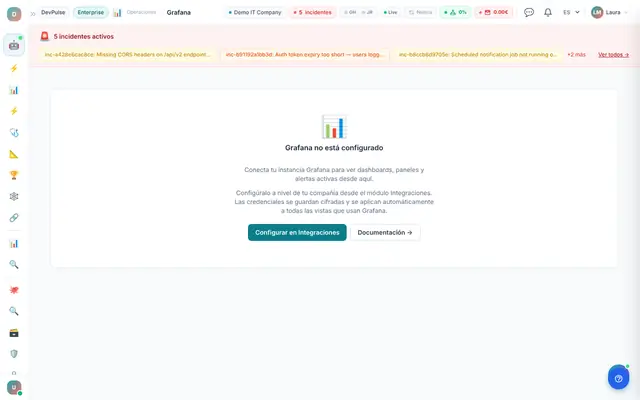
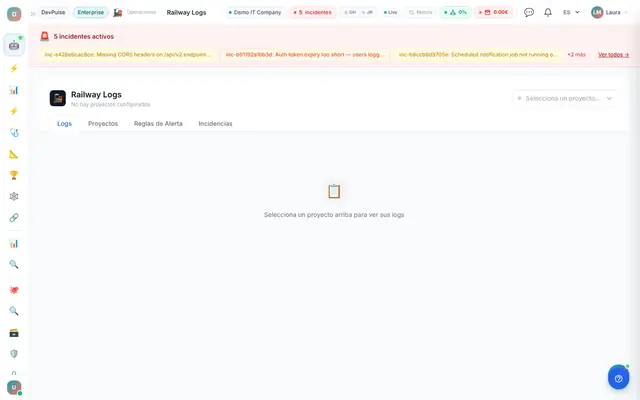
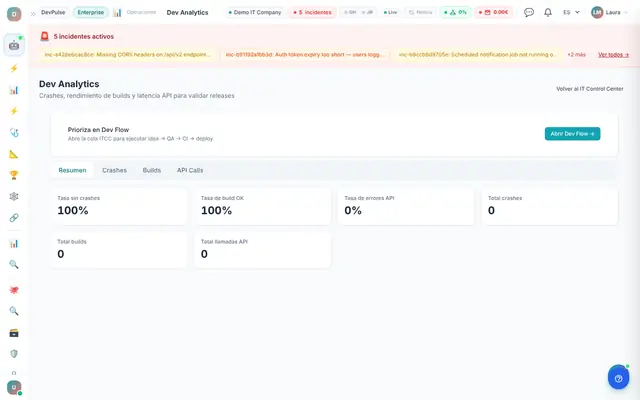
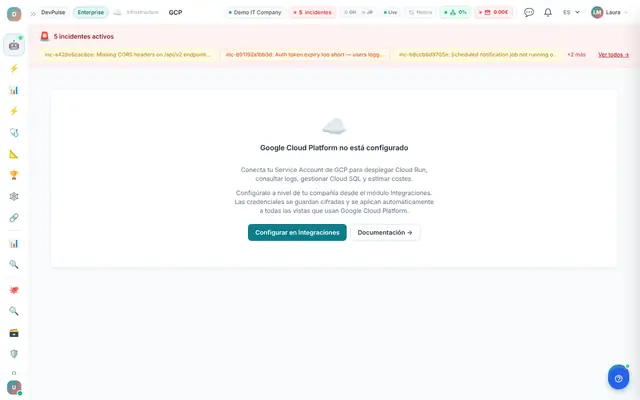
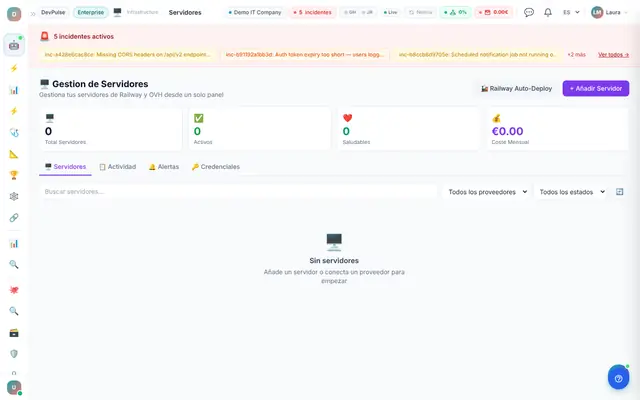
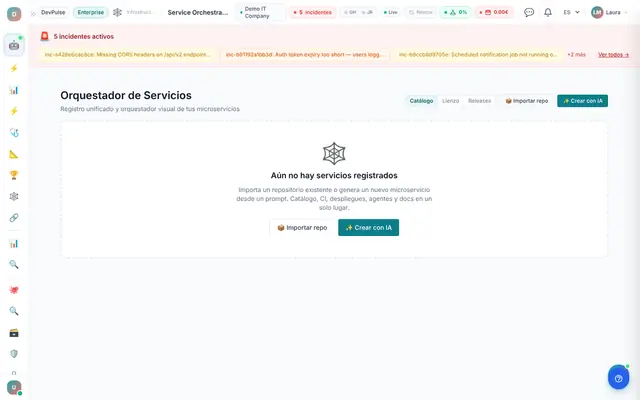
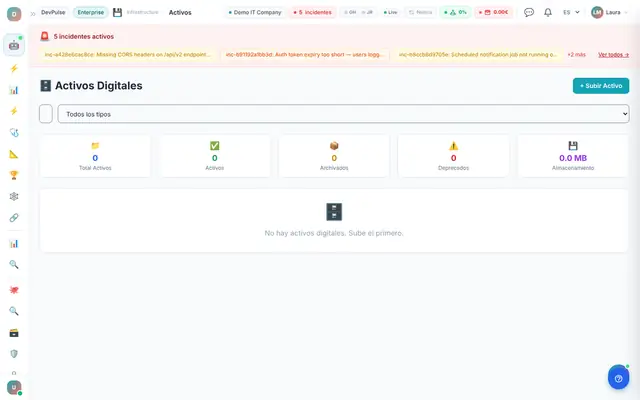
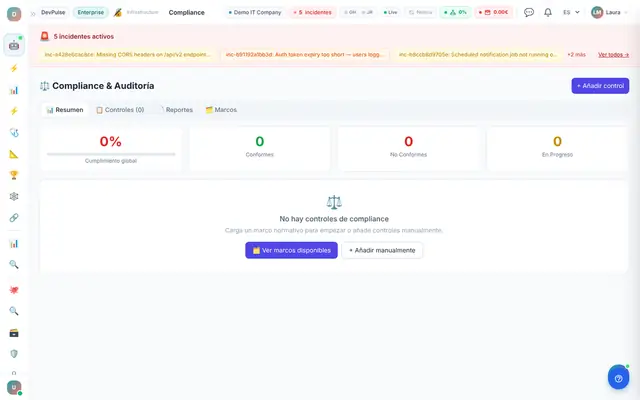
GitHub. Connect GitHub to sync repositories, branches, commits and pull requests with code metrics.AutoPulse. Continuous-improvement scanner for your GitHub repositories: findings, change proposals and rule sources.Repositories. Your repositories in one place, with metrics and activity analysis.Code analysis. Analyses GitHub repositories with AI: complexity, patterns, recommendations and dependency map, using the user's own token.GitHub docs. Connect a directory of a GitHub repository and read its documentation inside the platform.Code quality. Static analysis of security, complexity, code smells and style in your repositories, with reports, trends and rules.Component analyzer. Scans repositories and catalogues their components by framework so you can inspect each one.Security hub. Consolidated dashboard of vulnerabilities and security findings in dependencies and code, by severity.Code DNA. Historical evolution of code quality and a heatmap of risky files: hotspots, churn, age and complexity.Jira. Two-way Jira integration: boards, issues, sprints and epics synced with the platform.Linear. Connect your Linear workspace to sync teams, issues and cycles with the platform.Azure DevOps. Connect your Azure DevOps organisation with an access token and sync projects, boards and work items.AI tickets. AI triage and prioritisation, with critical and high-value tickets linked to Dev Flow.Kanban. A delivery board by columns with AI scoring, native tickets and Jira sync.Gantt. Project timeline planning with tasks, milestones and dependencies, and AI-assisted planning.Work items. Work hierarchy from pillars and requests down to epics, stories and tasks, with progress.QA and Playwright. Validate branches with evidence, visual regression and autonomous AI runs linked to Dev Flow.Runbook pipelines. Turn L1 support runbooks into executable automation pipelines.Releases. Versions with their tickets, changelog, approvals and rollback.Feature flags. Central flags, A/B experiments and business variables for gradual roll-outs, with percentage-based deployment.OTA updates. Ship over-the-air versions of your mobile apps without going through the stores.Mobile delivery. Builds, OTA updates, store submissions, credentials and CI tokens for your apps in one place.Preview channels. Deploy Git branches to isolated preview environments, each with its own URL.CI/CD pipelines. Continuous integration and deployment pipelines with their status, metrics and alerts, and creation of new pipelines.Incidents. Incidents by status and severity (P1 to P4) with a 30-day calendar, MTTR and MTTA, escalation and post-mortems.On-call. Critical P1/P2 incidents, active incidents and SLA breaches, with rotations and escalations.PagerDuty. Trigger, acknowledge and resolve PagerDuty alerts from the platform with your Events API v2 key.Datadog. Connect Datadog to see active alerts, dashboards and APM metrics inside Simvix, with encrypted per-company credentials.Grafana. Connect your Grafana instance to see dashboards, panels and active alerts inside Simvix.Railway logs. Logs from your Railway projects with alert rules and incidents.Dev Analytics. Crash-free rate, build performance and API latency to validate every release.Google Cloud Platform. Connect a GCP service account to deploy to Cloud Run, read logs, manage Cloud SQL and estimate costs.Server management. Railway and OVH servers in one panel, with status, health, cost and auto-deploy.Service orchestrator. Catalogue and visual canvas of your microservices, with releases and repo import or AI creation.Digital assets. The company's library of images, documents, videos and code, with active, archived or deprecated status and storage used.Compliance and audit. Compliance controls by framework with an overall percentage, compliant, non-compliant and in-progress items, and reports.